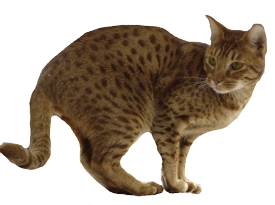
Ocicats
For information about the Ocicats click on their picture  
males
HCM, PKD & PRA tested
N/N
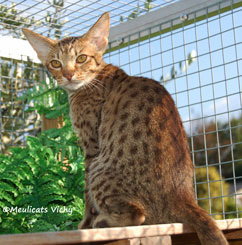
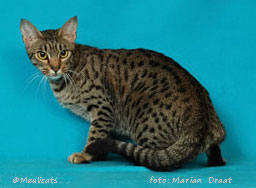
GR INT CH Meulicats Denzel
  HCM, PKD, PRA & PK tested
N/N
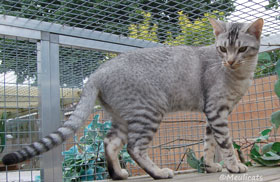
    INT CH Ozspots Barwon
   
females    
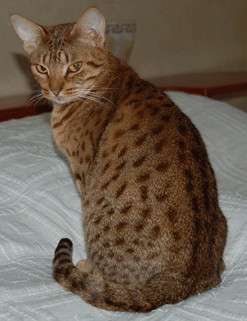
Escoburg's Brandy   PRA tested N/N                  
Brandy  024 CH Escoburg's Susy (retired)
        Susy b24      
                   
CH Escoburg's Chiara   HCM, PKD & PRA tested N/N CH Meulicats GiGi HCM, PKD & PRA tested N/N
 
Phoebe Meulicats Oci van Diem
   
          Aischa Meulicats van Ermelinde Ocicat/Abyssinian F1      
neuters        
Spot
    Spot b24
Moirai Fireworks
'Wizard'
         
  Twister                            
Twister 024                  
                                     

The Ocicat in general
The Ociat in general The Ocicat dates back to 1964. Virginia Daly from the USA crossed a Sealpoint Siamese with an Abyssinia. The kittens from this litter were crossed once again with a Siamese. These kittens looked like a kind of wild cat, an Ocelot, and so this crossing was called Ocicat. The later crossing with an American Shorthair is responsible for the silvery colour, the bone structure and the size and weight of the contemporary Ocicat. In 1966 the first Ocicat was registered with the American CFA (Cat Fanciers Association). In 1992 this breed was officially acknowledged by the FIFE. In the beginning of the nineties the Ocicat was introduced in the Netherlands.

Description of the breed
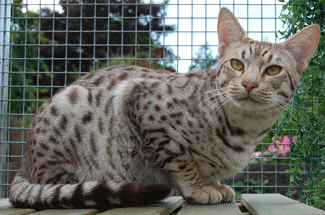
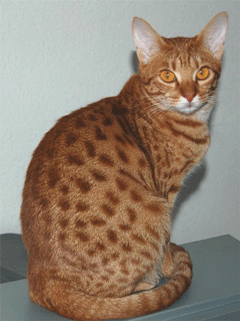
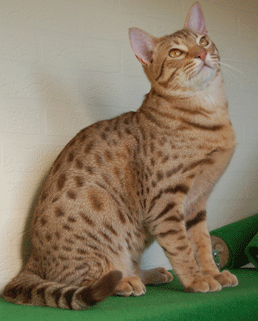
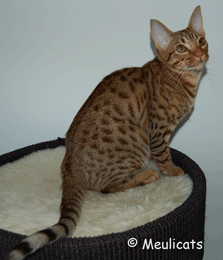
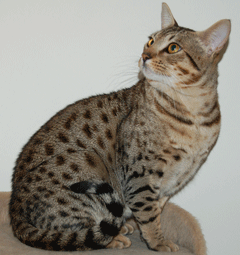
Head: the skull is a modified wedge showing a slight curve from the muzzle to the cheeks, with visible, but gentle rise from the bridge of the nose to the brows.
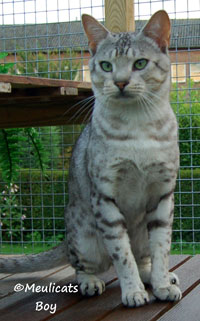
Eyes: large, almond in shape, and angled slightly upwards towards the ears, with more than the length of an eye between the eyes. Every colour is accepted except blue.
Ears: alert, moderately large. When present ear tufts extending vertically from the tips of the ears are a bonus.
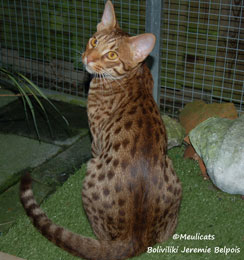
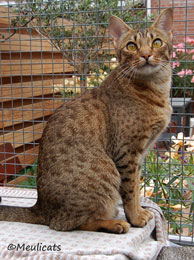
Body: rather long-bodied, solid, with depth and fullness but never coarse. Substantial bone and muscle development, yet with an athletic appearance. The legs are long, of good substance and well muscled; powerful and in good proportion to the body, the paws are oval and compact.
Tail: fairly long, medium slim with only a slight taper and with a dark tip.
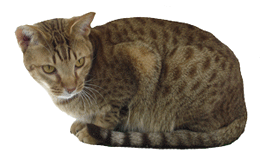
Coat: short, smooth and satiny in texture with a lustrous sheen; tight, close lying and sleek, yet long enough to accomodate the necessary bands of colour.
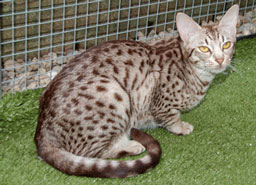
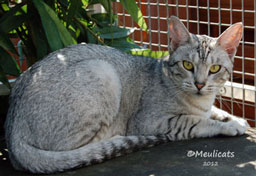
Colour: there are 12 accepted Ocicat colours: tawny, chocolate, cinnamon, blue, lavender (lilac) and fawn. These colours are also with a silver undercoat, and of course a lot of spots.

Character
They are active, lively and very intelligent cats. They need a lot of attention and they love the company of other cats and people. They are very much devoted to the people they live with, but they hate being alone all day. On average they keep good company with other cats and there will rarely be a problem with dogs. The character of the Ocicat is hard to describe; only when you meet them ‘in person’ you will find out how special they are.